
Resume Writing Made Simple:
How To Write A Good Resume in 2026?
Learning how to write a resume for a job is about more than listing qualifications; it's about presenting your story in a way that grabs attention. From structure to wording, we’ll help you highlight what matters most and leave out what doesn’t.
Table Of Content
A Comprehensive Step-by-Step Guide for 2026?
In this guide, we will discuss:
How to Write a Resume: Step-By-Step Guide
How To Write A Good Resume: 6 Steps
Final Thoughts


A Comprehensive Step-by-Step Guide for 2026?
There are plenty of guides on how to write a resume online, but not all of them guarantee that your resume will make it to the second interview or even get any attention from the recruiter. But how can you figure out the best resume layouts to build your own?
Selecting the correct resume formats and templates is tough, but making one from scratch is also time-consuming, especially if you don't know where to start.
So, to cater to that, we have brought you this straight forward guide with plenty of resume expert tips and examples that will increase your chances of getting recruiters' attention and eventually help you get the job you have been looking for.

PRO TIP
PRO TIP
Your resume is like your personal highlight reel—it shows employers what you've achieved, why you're the best fit for the job, and where you hope to go next.
So, to cater to that, we have brought you this straight forward guide with plenty of resume expert tips and examples that will increase your chances of getting recruiters' attention and eventually help you get the job you have been looking for.
In this guide, we will discuss:
Looking for a quick way to make a resume?
Looking for a quick way to make a resume?
Our AI-powered resume builder is super fast with resume creation. It has more than 30+ resume templates and professional & free cover letter formats that you can quickly customize based on your industry.
How to Write a Resume: Step-By-Step Guide
We have divided the resume creation process into steps to help you easily understand the process of creating a perfect resume without missing any important details that can lead to rejection.
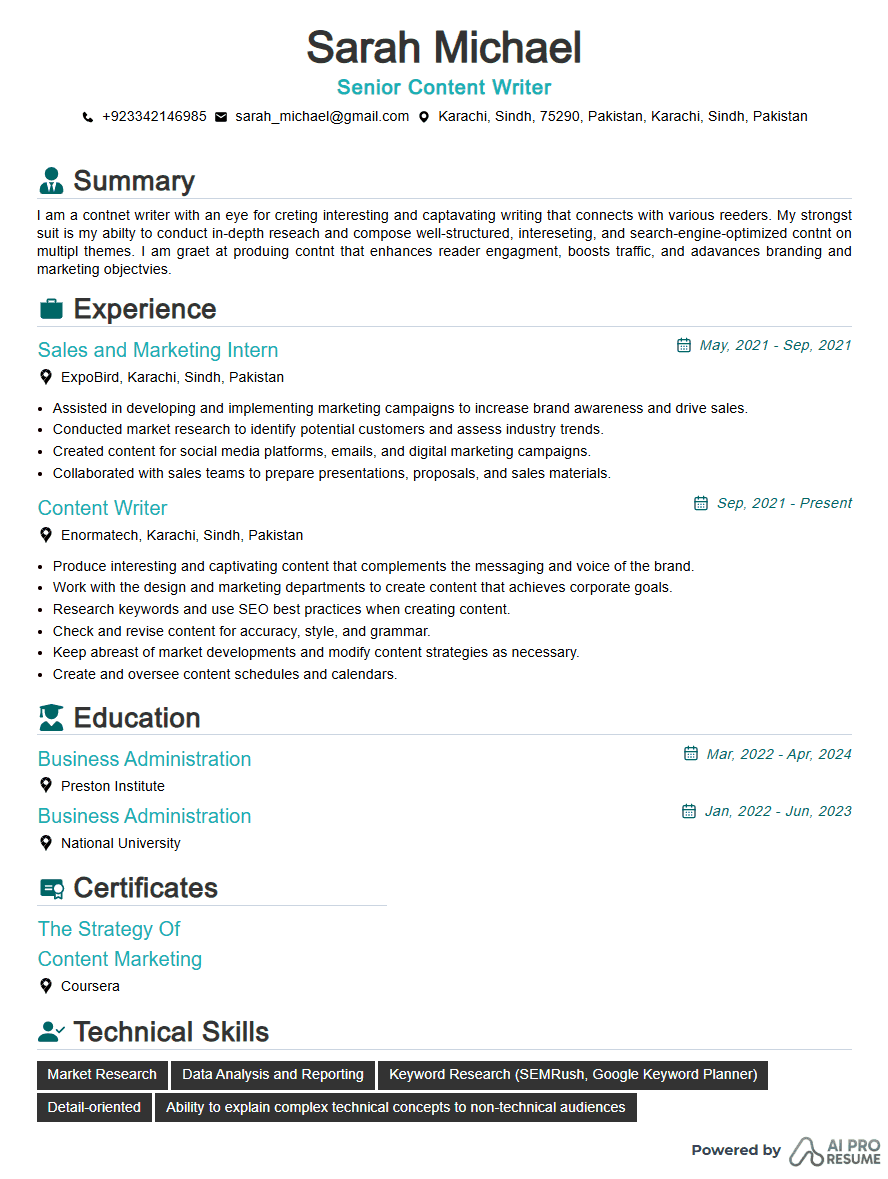
Also, this is what a flawless resume looks like:
Wording and readability analysis
Eliminate typos and grammatical errors
Content suggestions based on your job and experience
Eliminate typos and grammatical errors
Content suggestions based on your job and experience
How To Write A Good Resume: 6 Steps
Before diving into each step individually on how to write a resume, we are listing down all the steps for an overview, so that you know what we are going to learn later in the guide:
1. Identifying Your Audience
The first step is identifying your audience—the people and technologies that will read your resume.
Your primary audience will probably be an Applicant Tracking System (ATS). ATS is a system that scans a candidate's resume and qualifies it for the second screening by the second audience. This human recruiter will review your application and decide whether to contact you for the interview.
2. Fetch Important Skills & Keywords
After establishing your first audience, the next step is finding the best way to pass the ATS and recruiter review. To do so, you need to understand how ATS works. ATS is like a human recruiter, but an electronic one. It manages the hiring process electronically and ranks the best resumes by scanning for relevant keywords and skills mentioned in your resume that resonate with the job description.
These are some of the best ways to find and use relevant keywords in your resume. You need to look for keywords such as:
3. Different Resume Formats And Choosing The Right One
Before diving into the details, the very first part of the resume building is to decide which of the best resume layouts to opt for. There are three kinds of best resume formats that you can choose from. All three focus on different sections of a resume based on various situations.
The three best resume layouts are:
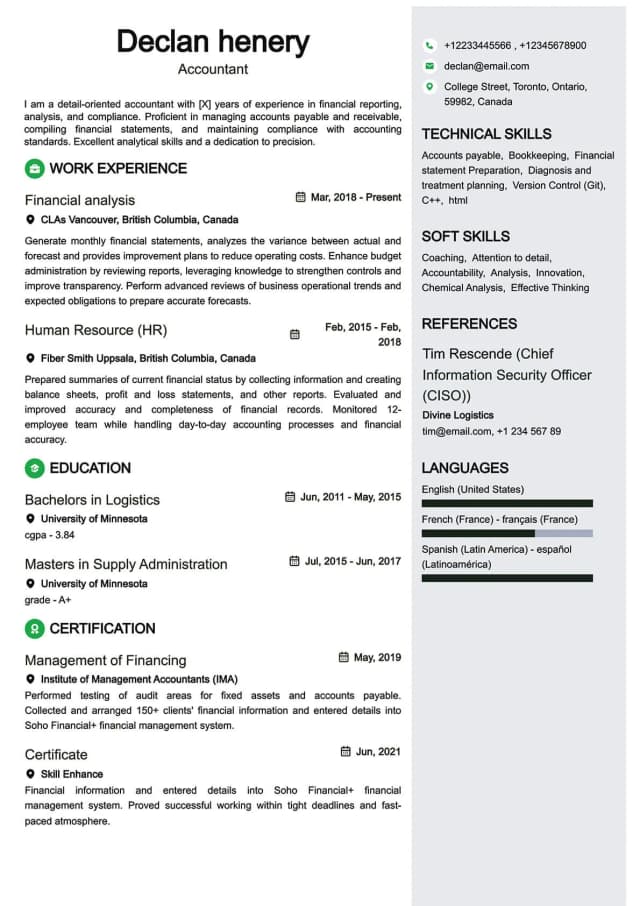
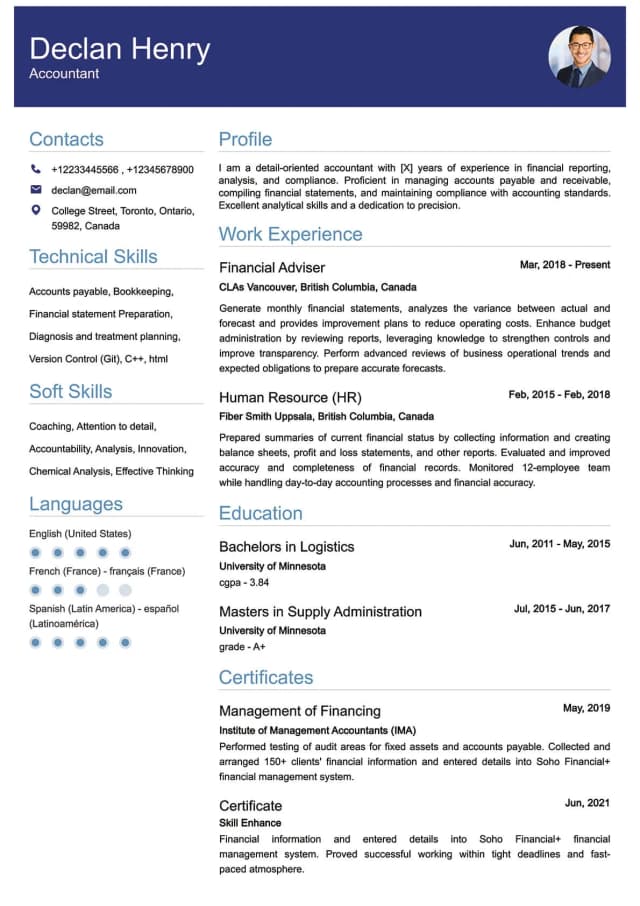
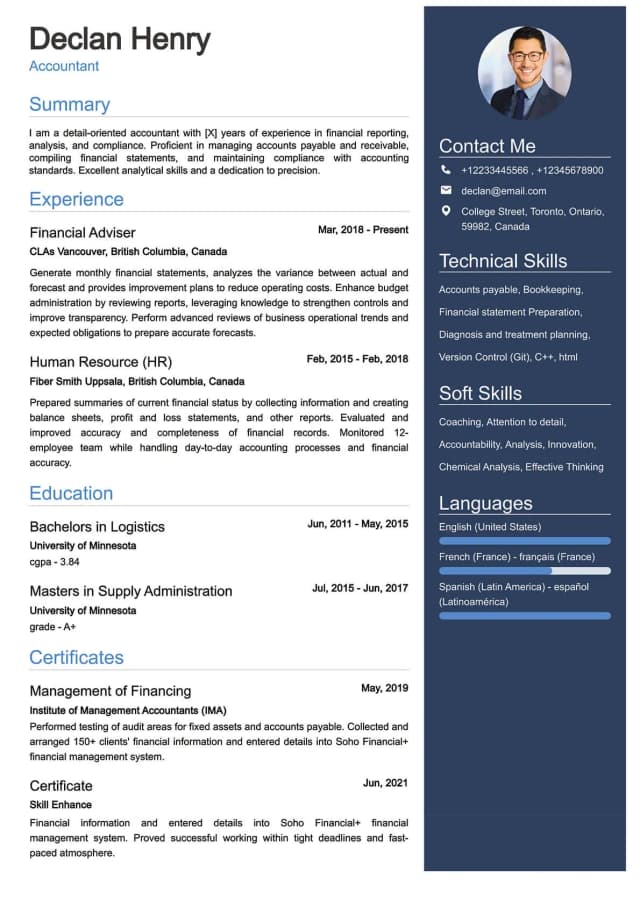
Despite all three best resume layouts, reverse chronological is the most common format, and most recruiters prefer it. It lists your most recent job at the top and works backward, which is why most recruiters prefer it. It is also best for ATS because it makes it easy for the system to parse and show the progress in your career.
PRO TIP
PRO TIP
This (Chronological format) best layout for a resume is perfect for people with consistent work history or professionals looking to show career growth.
Here is what a reverse chronological resume format looks like:
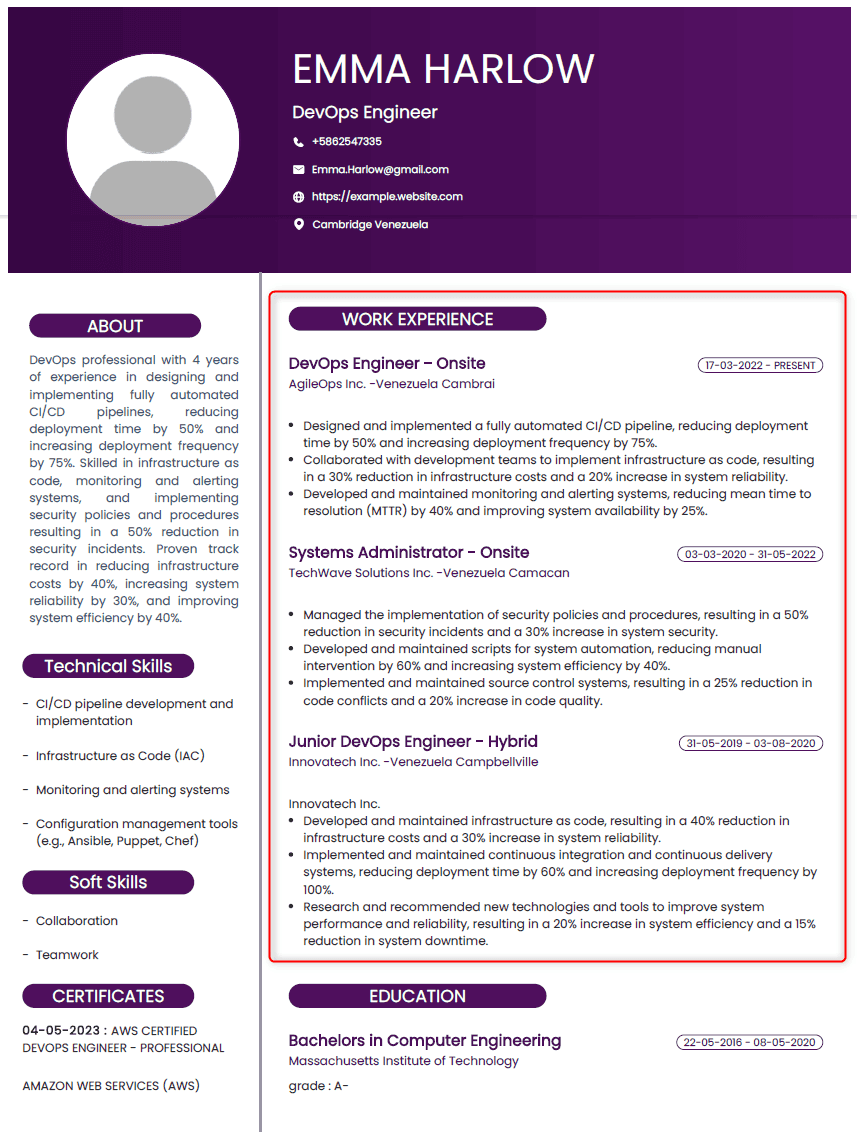
However, the reverse chronological form is the most common one, which doesn't mean the other 2 formats are insignificant. If you are someone who explores different careers constantly and has a diverse work history, a combination will work the best for the candidate, as it will put equal focus on the varied and transferable skills that they gained from various job experiences.
PRO TIP
PRO TIP
On the other hand, a functional format will work best for individuals who recently graduated with a significant career break and want to focus more on skills rather than work experience.
4. Sections Every Resume Must Include
Regardless of the perfect resume format you choose, there are some sections every resume should have. Let's break them down one by one:
01:
Contact Information
This is the simplest yet most crucial part of your resume. Make sure it's clear and easy to find.
What to Include:
- Full Name
- Phone Number
- Professional email address
- LinkedIn profile (optional)
02:
Professional Summary or Career Objective
The second and most important element of a resume is a professional summary or career objective that goes right on top of your resume. It is short and direct and tells the recruiter in quick snippets. Thus, make sure it is creative and includes all the right characteristics of an appealing resume; let's talk about both separately, how it should be, and who it is best for:
1:
Professional Summary
Knowing how to write a resume summary starts here: it's a quick overview of your experience as well as your skills, also called a profile section. It's excellent for experienced professionals who like to underline their accomplishments. See the example below to get an idea of how to write a profile for a resume:
2:
Career Objective
If you're new to the workforce, a recent grad, or wondering how to write a resume for high school students with limited experience, an objective statement can outline your goals and how you can contribute to the company.
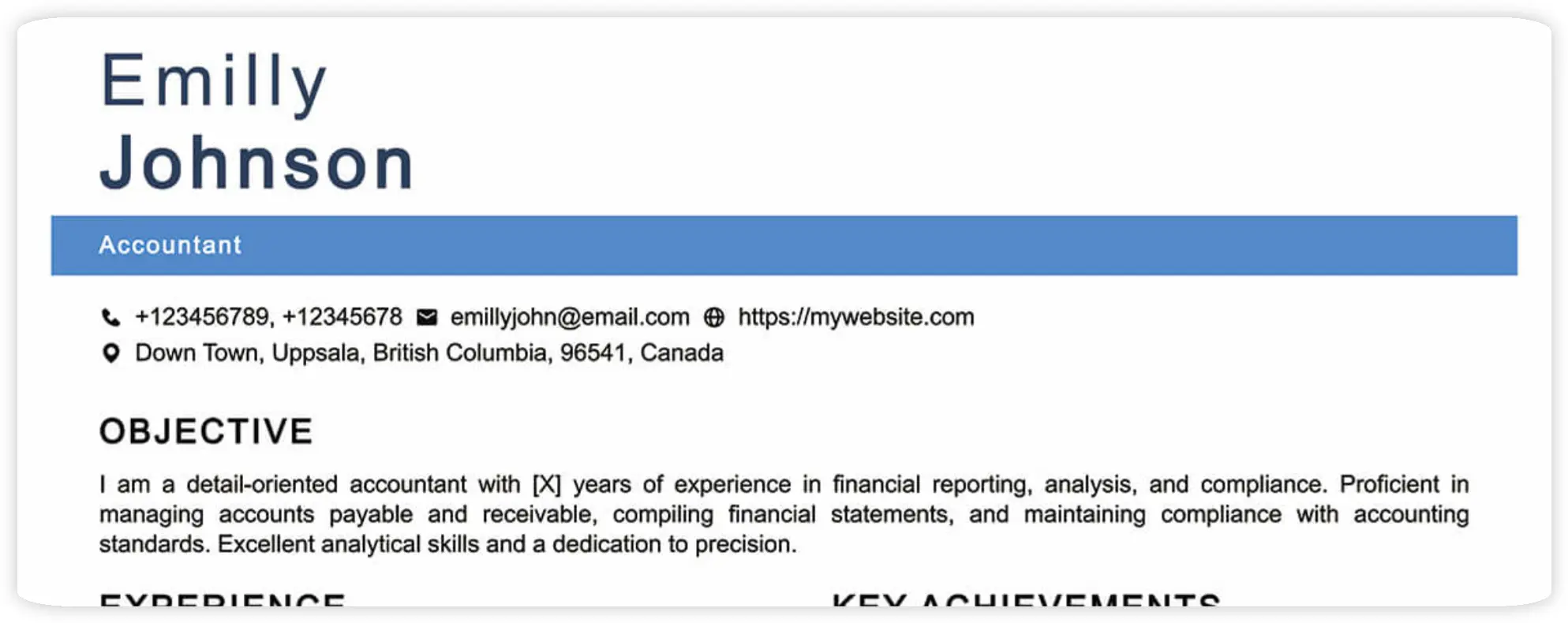
Example:
Recent graduate in Graphic Design eager to apply creative and technical skills to help brands grow through visually compelling content.
03:
Work Experience
The third most important section of a resume is obviously your work experience. This section should show your career progression and what you've achieved in each role. You can use bullet points to make the work experience clear and easy to read. However, if you don't have much experience, you can highlight your education and your relevant skills to the job description. You can also check out our guides on how to write a resume with no experience.
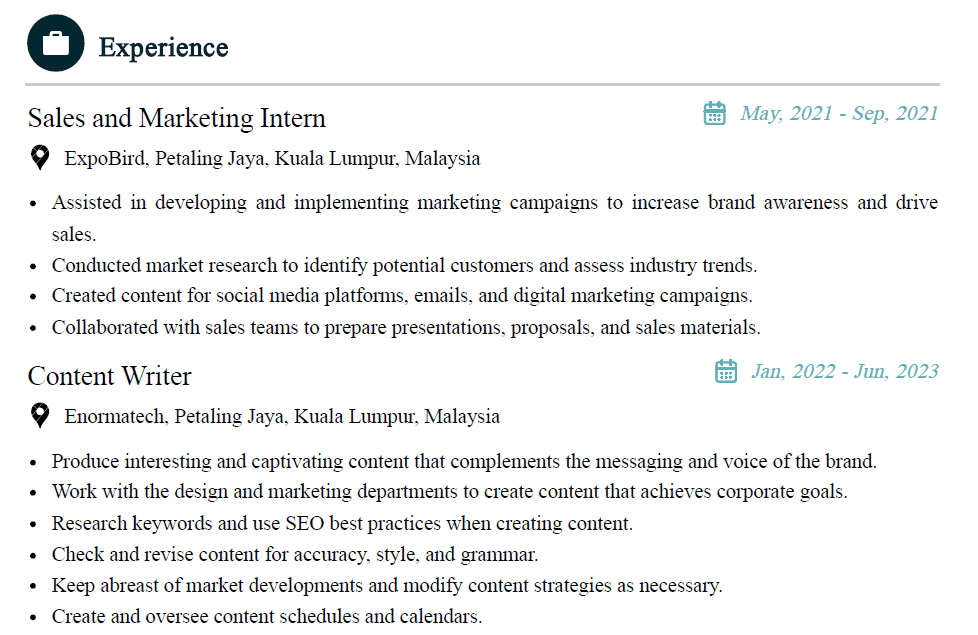
What to Include for Each Job:
- Job title
- Employer name
- Employment dates
- Key responsibilities and achievements
04:
Education
The 'Education' section of your resume is extremely important as it can be a great point to stand out from your competitors. It is important when you don't have much experience in the field, and it can work wonders for you when it comes to getting a job. Thus, you need to have your academic qualifications in reverse order, starting with the most recent degree or course.
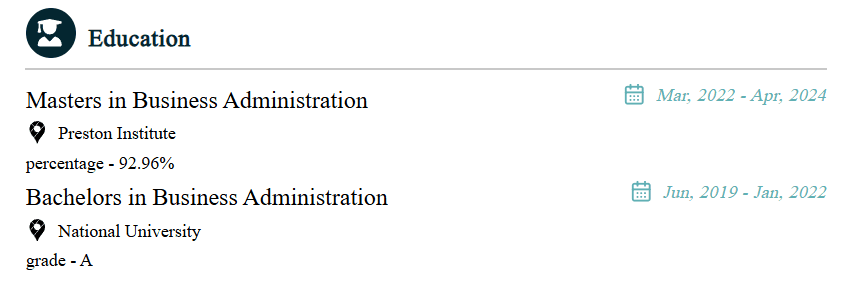
What to Include:
- Degree
- Institution name
- Graduation year
PRO TIP
PRO TIP
If you're a recent graduate, you can also add relevant coursework or projects.
05:
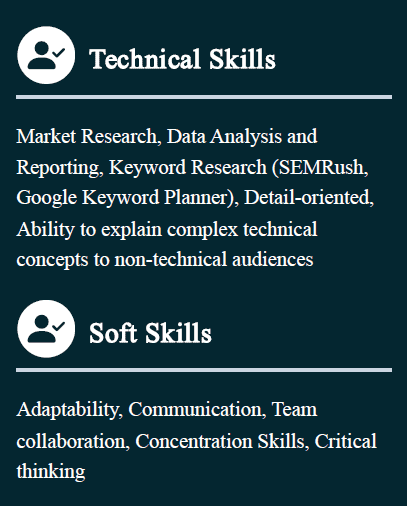
Skills
Another important section of your resume is the skills section. It is a quick way for the recruiter to know what you are capable of. This section can be a really good element if you don't have much work experience, are fresher, or are looking to switch your industry. The skills section is often divided into two categories, as you already know:
1:
Hard Skills:
Technical skills include data analysis, coding, or graphic design.
2:
Soft Skills:
This category includes your interpersonal qualities like teamwork, problem-solving, and time management.
PRO TIP
PRO TIP
Match your skills to the ones mentioned in the job description, as it can help the recruiter find your resume relevant. Plus, it can be a great way to pass the ATS system because it passes your resume by detecting relevant keywords and phrases from the job description.
06:
Certifications and Awards
Sometimes, people don't consider adding or putting extra effort into putting their certificates or awards. However, it can be a great section and add value to your resume that a recruiter might find compelling, which can ultimately boost your chances of getting an interview.
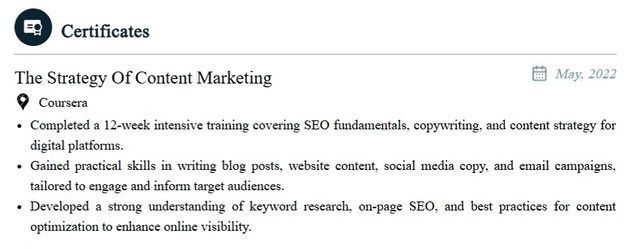
What to Include:
- Certifications (e.g., Google Analytics, Certified Scrum Master)
- Awards (e.g., 'Top Sales Performer 2022')
5. Writing Tips for a Winning Resume
Keep It Relevant:
Tailor your resume for each job application. Highlight experiences and skills that match the role.
Use Keywords:
Many businesses employ applicant tracking systems (ATS) to scan resumes. Adding related keywords will help you pass this filter.
Quantify Achievements:
Numbers make your accomplishments more tangible and credible.
Be Honest:
Don't stretch or lie about your skills or experience.
Proofread your resume:
The most important thing after you are done making your resume is to check for grammar and spelling mistakes; otherwise, you might leave a bad impression on your employers.
Add a cover letter:
To give further details about your experience to help hiring managers understand how your skills align with the job role.
How to craft a job-winning cover letter?
How to craft a job-winning cover letter?
Use AI Pro Resume to generate a personalized cover letter by simply entering a prompt, and start crafting yours in minutes.
6. A Quick Word About Our AI-Powered Resume Builder
If designing and formatting and learning how to write a resume for a job from scratch feels like a challenge, tools like resume makers, which include some incredible platforms such as AI Pro Resume, can make the process easier. These tools offer professional resume templates, help with content with AI suggestions, and ensure ATS-friendly formatting.
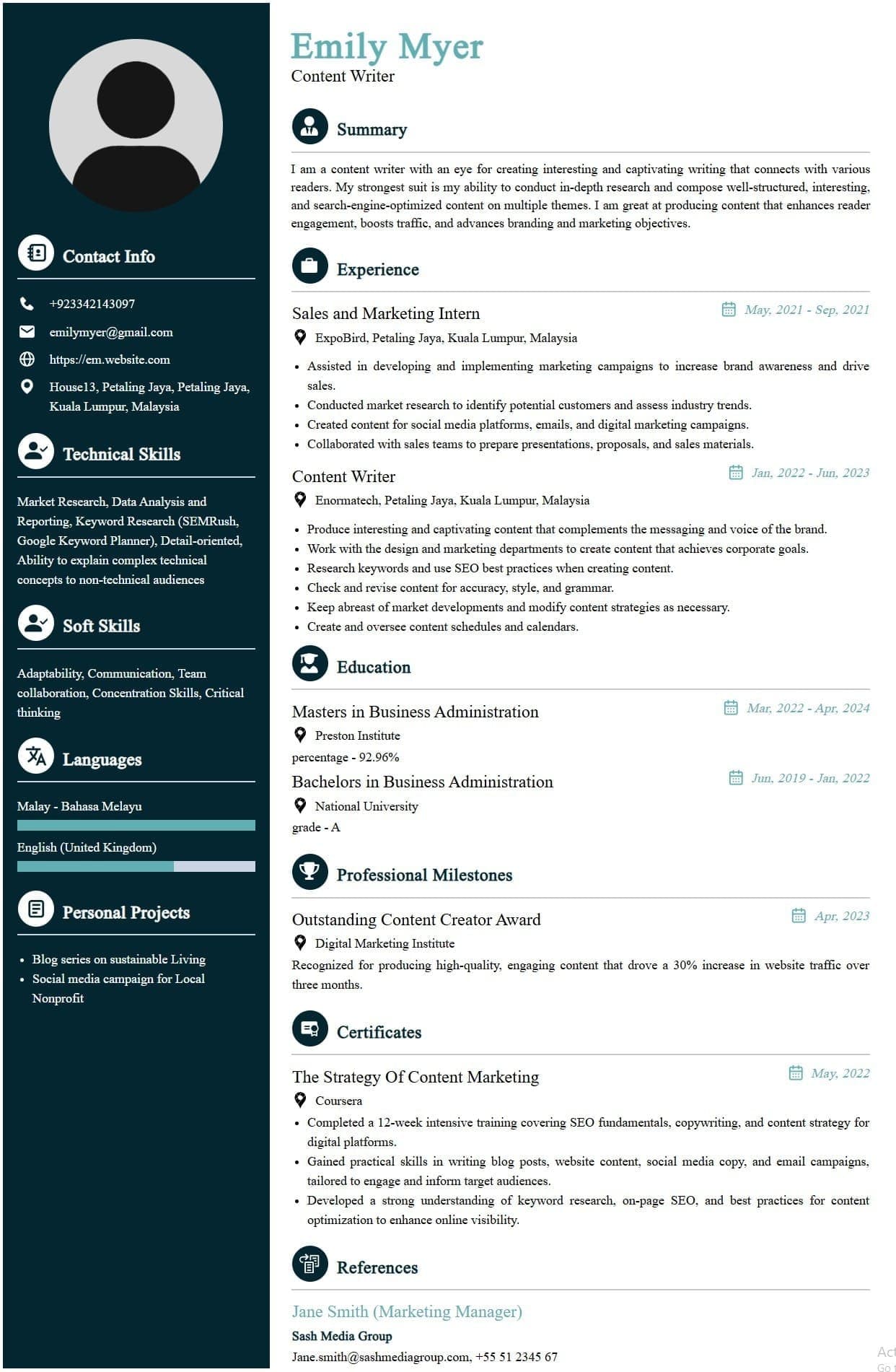
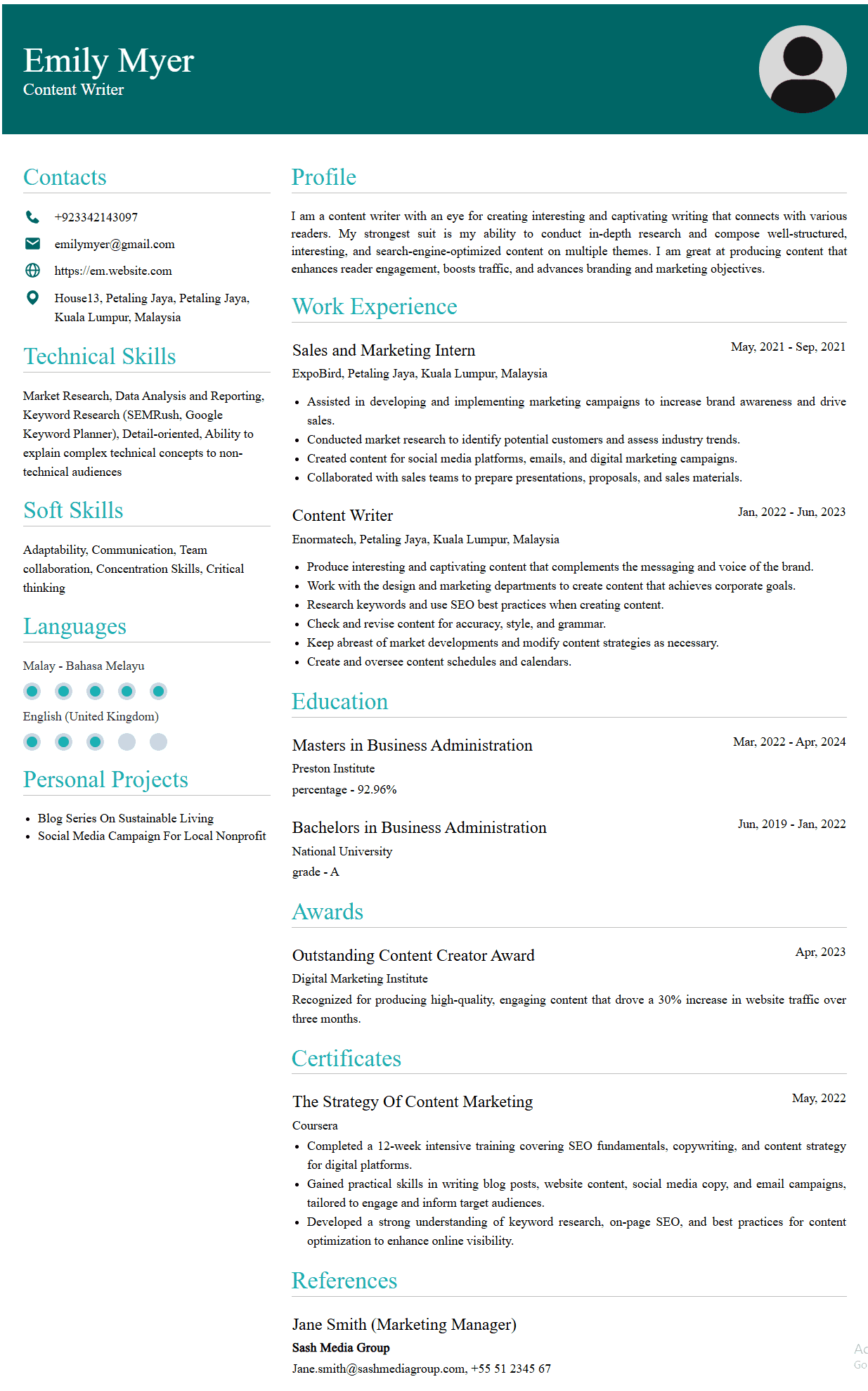
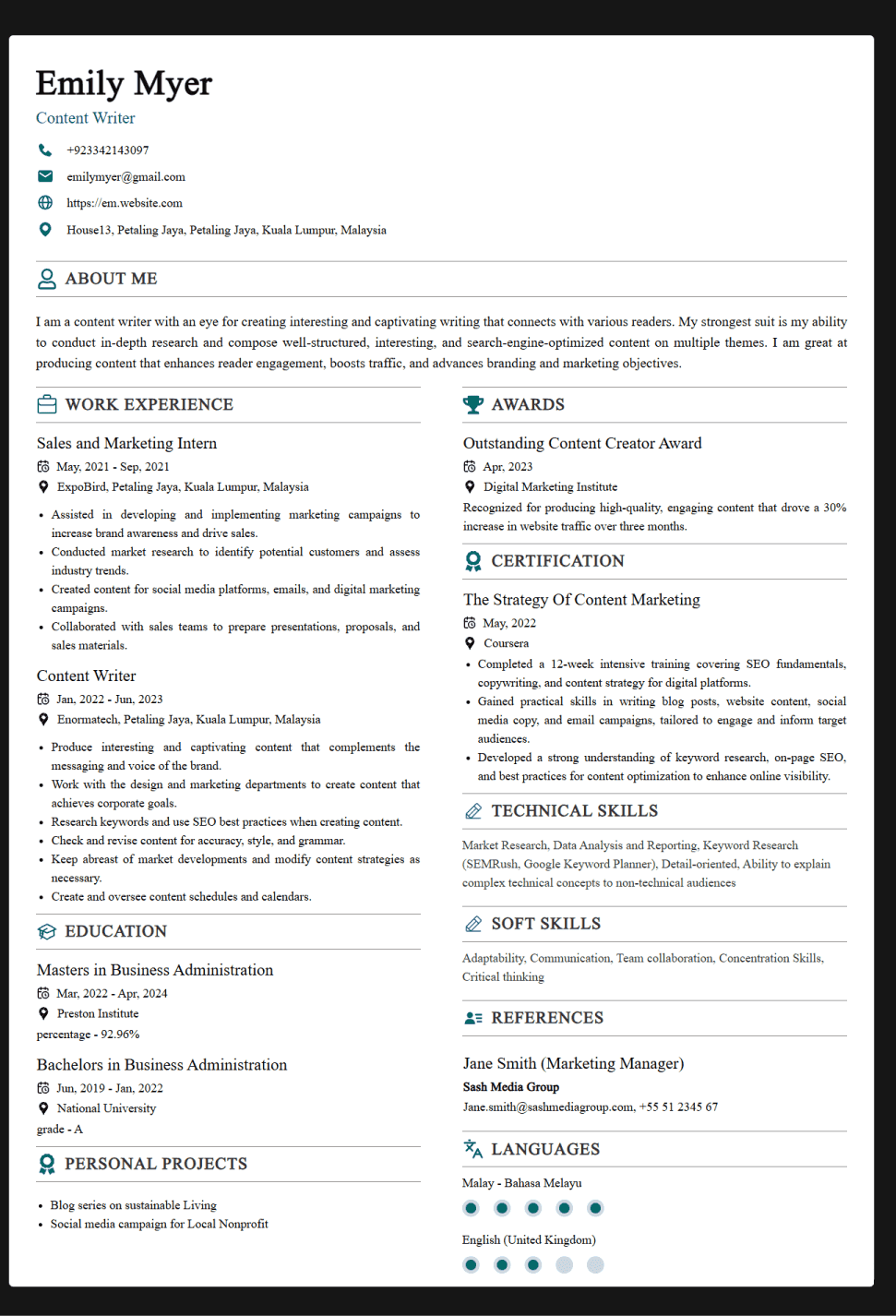
Some Professional Resume Examples For You To Check Out
Pro Tip
Pro Tip
To build your resume in these or similar templates, head towards AI Pro Resume and boost your chances of getting your much-awaited job opportunity.
Final Thoughts
It's not enough to simply state your qualifications in a well-organized format; a great resume tells a story of your achievements and prospects. With this detailed guide, you should have the tools and knowledge to create a great working resume.
After all, your resume is your very first step towards getting your dream job. So, you better invest your time in it — whether you're figuring out how to write a resume for a writing job or any other role, the steps stay the same. Use a professional cover letter template, and let your personality, experience, and skills do the talking.